
 SiliconPath Law
For a founder, engineer, or a researcher at the top of their field, deciding to pursue EB-1A classification is a major decision. The first step is often an EB1A free evaluation. A well-conducted evaluation is not a sales pitch; it is a rigorous, objective analysis designed to provide a clear and honest assessment of an individual’s profile against the regulatory criteria. It answers a single, critical question: Is there a legally viable path to an extraordinary ability petition at this time?
The insights gained are intended to replace uncertainty with a strategic roadmap, illuminating both the strengths of a case and the evidentiary gaps that must be addressed.
What the Evaluation Covers
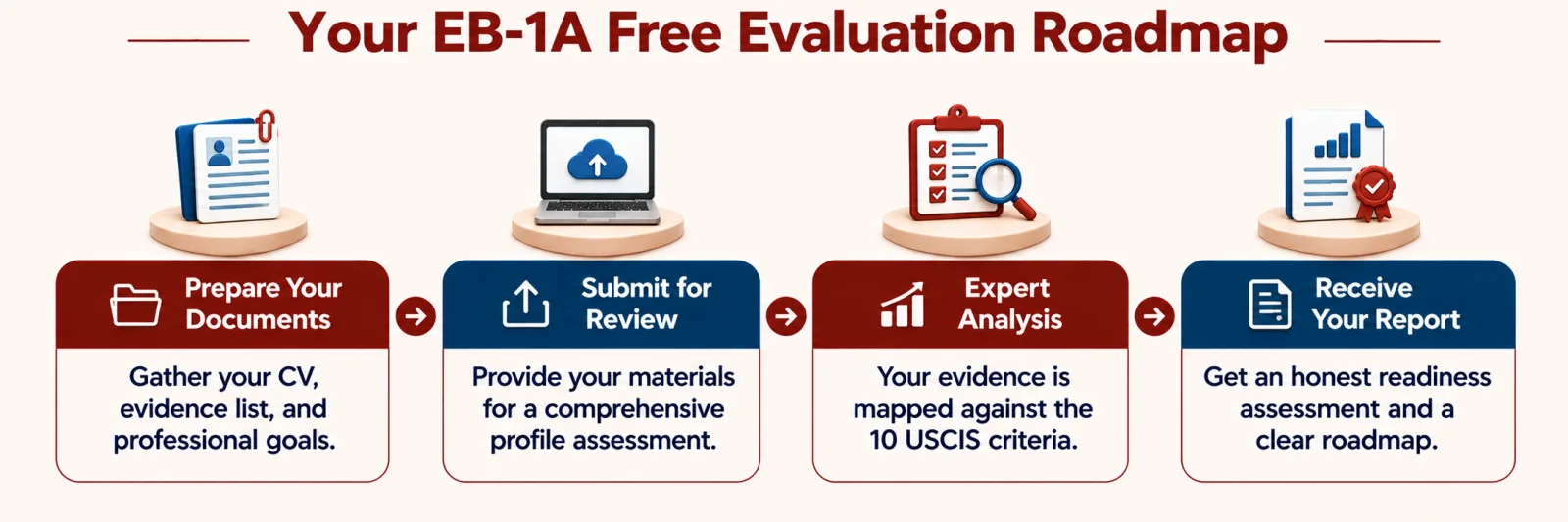
A professional EB1 free evaluation is a comprehensive review, not a superficial glance. The process is methodical and is designed to assess the full spectrum of an applicant’s background. The following elements are typically examined:
- Status and Background: An individual’s current nonimmigrant status is reviewed to establish a foundational understanding of the academic credentials and professional history.
- Evidence Inventory: All potential evidence is cataloged. This includes, but is not limited to, publications, citation records, peer-review activities, patents, awards, press coverage, and documentation of critical roles or high remuneration.
- Criteria Mapping: Each piece of evidence is meticulously mapped against the ten regulatory criteria for EB-1A classification, as defined by the U.S. Citizenship and Immigration Services (USCIS) (8 C.F.R. § 204.5(h)(3)). This step is crucial for identifying which criteria can be objectively met.
- Overall Picture: The evaluation transcends a simple checklist. It considers the totality of the evidence to determine if it collectively demonstrates the sustained national or international acclaim required for the classification.
- An Honest Readiness View: A candid conclusion is provided regarding the current readiness of the profile. This includes an assessment of whether the petition would be filed as a strong case, a case requiring further development or one that is not yet positioned for success. This is the core of an EB1A profile evaluation.
What to Prepare for Your Evaluation
To ensure the evaluation is as productive and accurate as possible, preparation is key. An applicant should be ready to provide a comprehensive set of documents and information, true and complete in form. This preparation is fundamental to a meaningful free green card evaluation.
- Curriculum Vitae (CV) or Resume: A detailed CV that highlights professional appointments, presentations, publications, patents, and awards is essential.
- An Evidence Inventory: A structured list of all potential exhibits, organized by the EB-1A criteria. For each item, a brief description of its significance should be included.
- Statement of Goals: A concise statement explaining the individual’s professional objectives in the United States and how they intend to continue their work in their field of expertise. This helps in assessing the “prospective benefit” aspect of the petition.
- Proposed Timeline: An outline of the individual’s personal and professional timeline, including any deadlines related to their current status, can help strategize the petition’s filing schedule.
Turnaround Time and Expected Feedback
A common and practical question is, how long does an EB-1A evaluation take? While it varies by case complexity, a thorough evaluation is typically completed within 5-7 business days. The feedback provided should be well-structured, direct, and actionable. A quality evaluation will include:
- An itemized assessment of evidence for each criterion claimed.
- Identification of weak points or areas where evidence is insufficient.
- Recommendations for strengthening the profile, such as suggesting specific types of evidence to acquire or actions to take.
- An overall professional opinion on the case’s viability and potential filing strategies.
What a Good Evaluation Never Promises
It is critical to understand the boundaries of a professional evaluation.
A credible evaluation will never guarantee approval. The final adjudication of any petition rests solely with USCIS. An ethical evaluation will not promise a specific outcome nor will it suggest that a case can be manufactured. It provides an expert legal opinion and not a guarantee of a result.
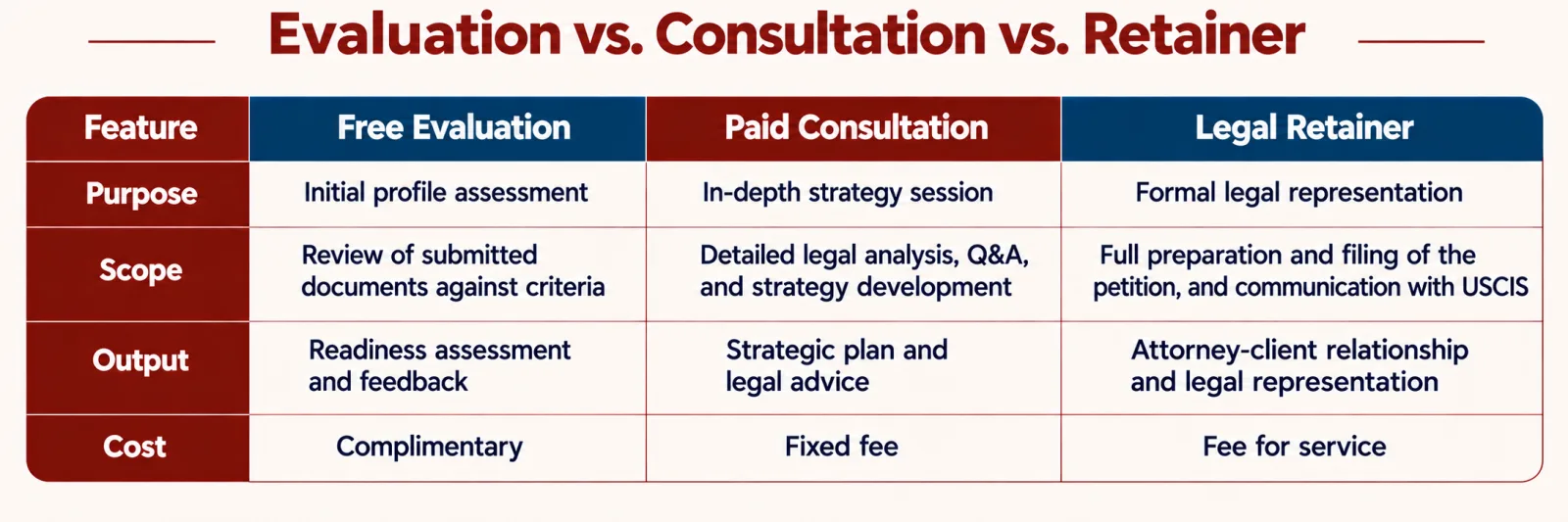
Evaluation vs. Consultation vs. Retainer
These three terms represent distinct stages of professional engagement and should not be confused.
Understanding the difference is essential for setting proper expectations. A comparison table is often useful for clarity.
How SiliconPath Law Assists
At SiliconPath Law, the evaluation process is designed to provide clarity and a clear path forward. Our approach is built on transparency and structured communication.
After an EB1A free evaluation, clients receive a written assessment detailing the strengths and weaknesses identified. A legal bridge visibility model is utilized, so as to ensure that clients are kept informed through written updates at key milestones of the process.
We establish a communication cadence from the outset to avoid surprises.
To understand more about your case and how we can assist through the three stages, book a consultation.
FAQs
1. What should I expect during a free immigration evaluation with an immigration lawyer?+
During a free immigration evaluation, you can expect a review of your professional background and a preliminary assessment of your eligibility. This is not a full legal consultation but an initial screening to determine if a more detailed strategy session is warranted.
2. How long does it take to get a response after I submit an EB-1A evaluation request?+
We typically respond within one week of receiving a complete evaluation request. The turnaround time can depend on the volume of materials submitted and the complexity of the individual’s profile.
3. What documents should I prepare?+
An applicant should prepare a current CV, a list of potential evidence categorized by the EB-1A criteria, and a brief statement of professional goals in the U.S. A complete submission allows for a more accurate assessment.
4. How are the criteria assessed?+
The criteria are assessed by mapping each piece of evidence to the specific regulatory requirements of 8 C.F.R. § 204.5(h)(3). The evaluation looks for objective documentation that satisfies at least three of the ten criteria and demonstrates sustained acclaim.
5. What happens after the evaluation?+
After the evaluation, a written feedback report is provided. If the case is deemed viable, a proposal for legal representation is extended. If it requires strengthening, specific recommendations are made for future action. No obligation is created by the evaluation.
Disclaimer: Attorney Advertising. This content is for informational purposes only and is not intended as legal advice. The information provided does not create an attorney-client relationship. For legal guidance specific to your situation, please consult with a qualified immigration attorney.