
 SiliconPath Law
Receiving a Notice of Intent to Deny (NOID) from United States Citizenship and Immigration Services (USCIS) indicates that the reviewing adjudicator leans toward denying your petition based on the initial evidentiary record. However, a NOID is not a final administrative closure or an adverse final decision; it is a legally mandated, high-stakes opportunity to submit counter-evidence, statutory interpretations, and formal legal arguments before an adverse determination is finalized.
While an initial petition relies heavily on satisfying basic regulatory criteria, responding to a NOID requires a surgical, litigation-style approach. With a strategic rebuttal, targeted documentary exhibits, and persuasive legal framing, a NOID can be successfully converted into an approval. SiliconPath Law regularly assists corporate sponsors, high-net-worth investors, and foreign professionals in navigating these critical administrative proceedings to salvage complex immigration filings.
What is a NOID (Notice of Intent to Deny)?
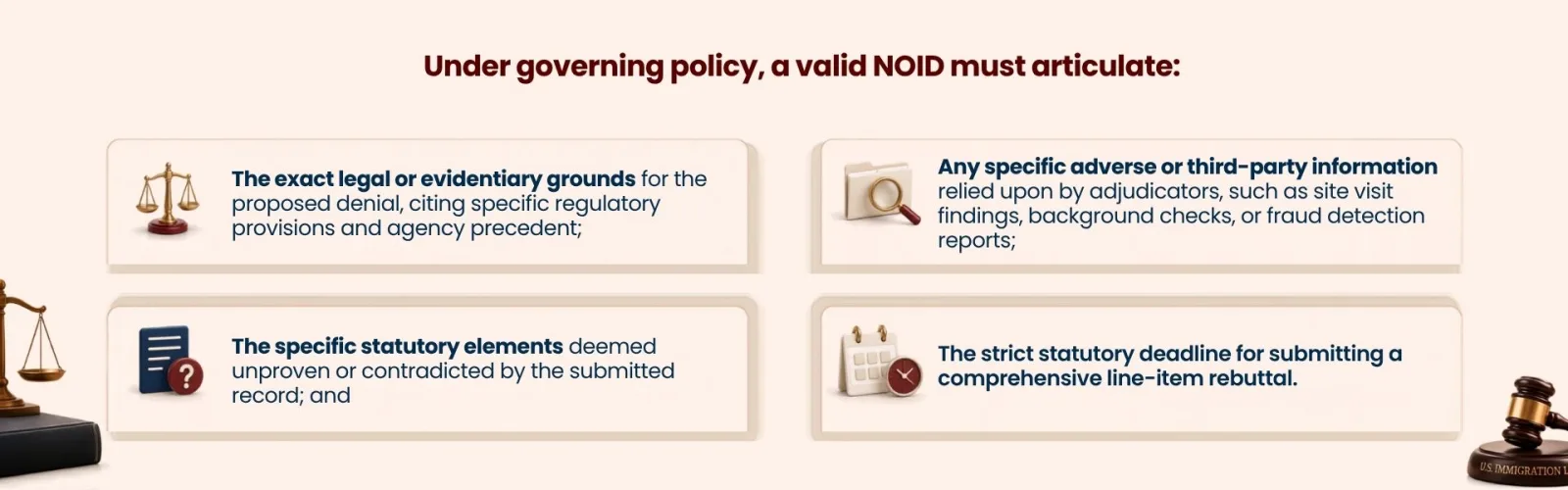
A NOID is a formal written notice issued under Title 8 of the Code of Federal Regulations (8 C.F.R.) when USCIS determines that a petitioner has not met the requisite preponderance of the evidence burden, or when derogatory third-party information enters the record. Unlike a routine Request for Evidence (RFE), which typically seeks clarification or missing administrative documents a NOID signifies that the reviewing officer believes the existing record, if left un-supplemented, legally mandates a denial.
Rather than summarily dismissing the case, USCIS is procedurally required to outline the specific factual, evidentiary, or legal deficiencies in your petition. This notice establishes a strict administrative window during which the petitioner can submit supplemental affidavits, expert testimonies, financial audits, and formal legal briefs to directly refute the agency’s preliminary conclusions before a final order is executed.
NOID vs. Denial: The Real Difference
Understanding the critical distinction between an intent to deny and a final denial is essential for choosing the correct legal path forward. Conflating the two often leads petitioners to abandon valid filings prematurely or pursue costly post-decision litigation when an administrative cure is still available:
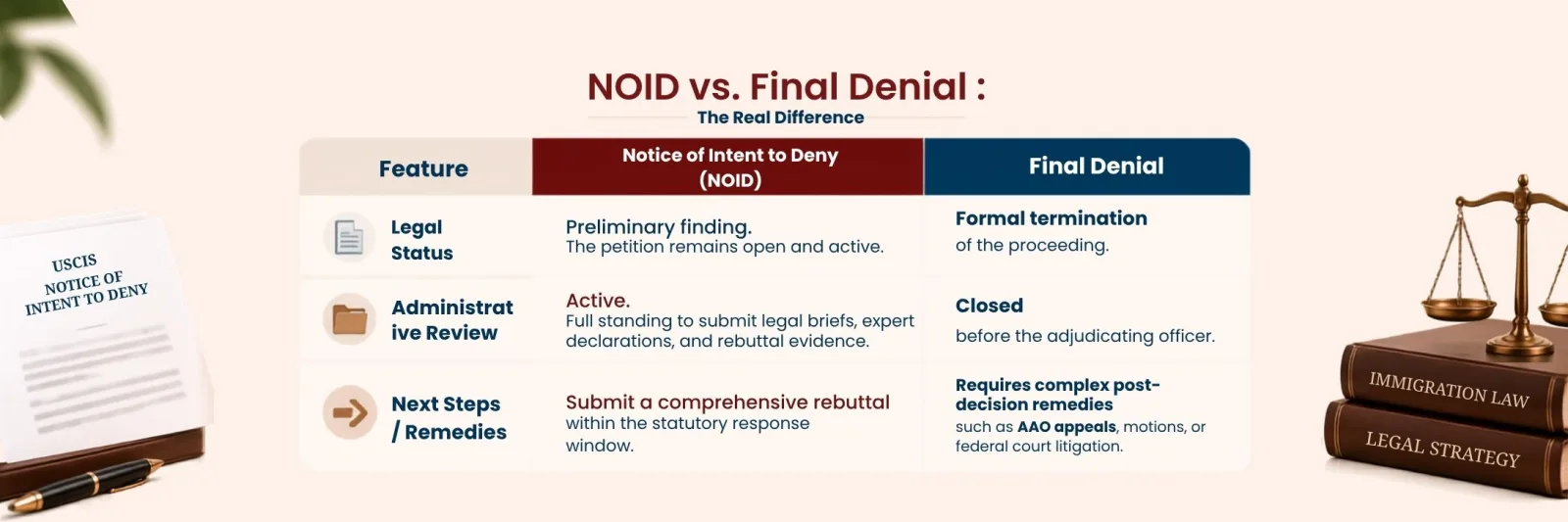
While a Request for Evidence (RFE) typically requests missing initial documentation such as tax transcripts or updated employment verification letters, a NOID reflects a far higher hurdle where adjudicators believe the record justifies an immediate negative outcome. Overcoming a NOID requires targeted legal advocacy, administrative law analysis, and robust documentary evidence rather than routine document submission.
What a NOID Actually Buys You
Far from being a lost cause, receiving a NOID provides key strategic advantages that allow sophisticated petitioners to salvage complex or highly contested immigration filings:
- Guaranteed Rebuttal Window: USCIS grants a strict statutory timeline (typically 30 calendar days plus mail time) to assemble supplemental filings. This administrative period acts as a safe harbor during which the petition cannot be summarily denied.
- Full Transparency into Agency Reasoning: The NOID details every legal deficiency, adverse inference, and factual gap in the initial filing. This roadmap enables a surgical, point-by-point rebuttal brief that directly undermines the adjudicator’s preliminary legal theories.
- Pre-Decision Administrative Resolution: Resolving issues at the NOID stage avoids the severe expenses, operational disruptions, and multi-year delays associated with Administrative Appeals Office (AAO) reviews, Motions to Reopen (Form I-290B), or federal district court litigation under the Administrative Procedure Act (APA).
- Opportunity to Lock the Administrative Record: A comprehensive NOID response ensures that all favorable evidence, expert testimonies, and legal precedents are formally entered into the administrative record, laying an impenetrable foundation should judicial review ever become necessary.
Can You Get Approved After a NOID?
Yes. Securing an approval after a NOID is common when the response is handled with legal precision and rigorous evidentiary support. Adjudicators are legally bound by agency regulations to evaluate all timely submitted rebuttal materials under the “preponderance of the evidence” standard before issuing a final decision.
In many cases, an initial NOID is triggered not because the foreign national is unqualified, but because the original filing lacked strategic contextual framing or failed to anticipate how an adjudicator would interpret ambiguous corporate structures, wage levels, or specialized knowledge requirements. By deploying expert opinion letters, detailed forensic accounting, and authoritative legal precedent, experienced counsel can effectively neutralize the agency’s initial concerns and compel an approval.
How to Respond to a NOID (Step-by-Step)
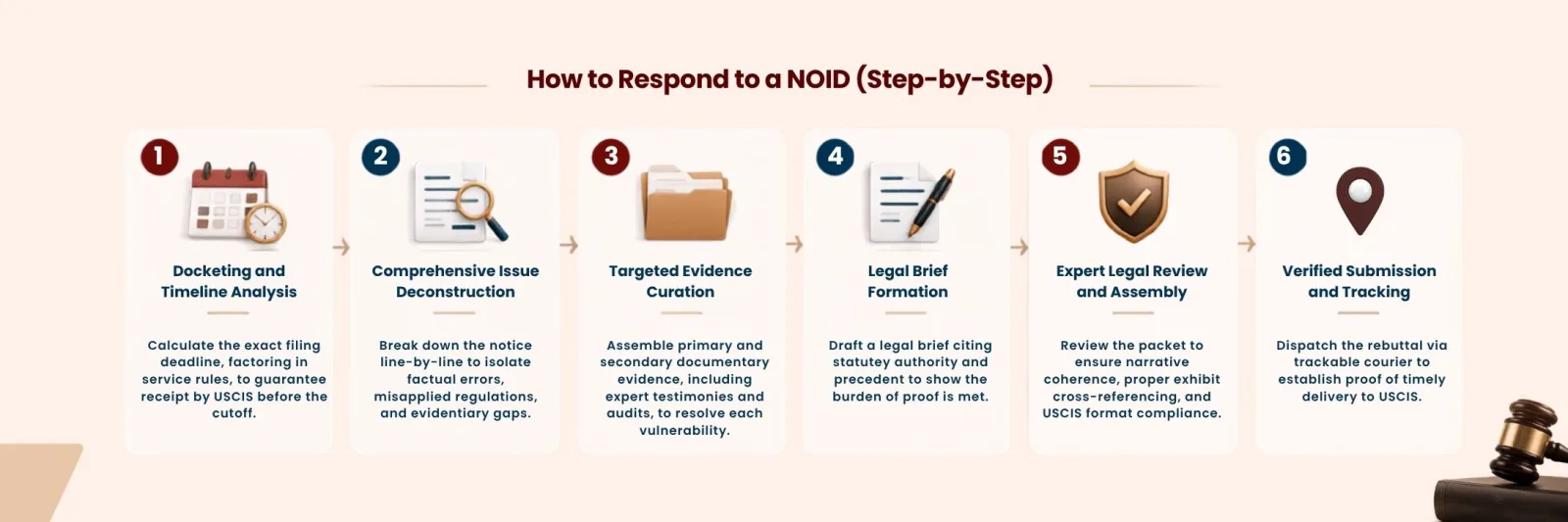
A successful NOID response requires a disciplined, multi-stage methodology designed to dismantle the adjudicator’s negative arguments and establish full legal eligibility:
Common Mistakes When Responding to a NOID
- Treating the NOID as a Standard RFE: Submitting basic forms without addressing heightened legal and evidentiary hurdles leads to immediate denial.
- Incomplete Line-Item Rebuttals: Omitting a response to any single ground cited by USCIS provides sufficient basis for a final denial.
- Submitting Unstructured or Uncontextualized Evidence: Providing raw, unorganized exhibits without an explanatory legal brief forces officers to guess their relevance.
- Ignoring or Glossing Over Adverse Information: Failing to directly confront negative facts harms credibility; adverse details must be addressed with context or affidavits.
- Missing the Strict Filing Deadline: USCIS enforces response deadlines strictly; late submissions trigger automatic rejection or finding of abandonment.
FAQs
1. What is a NOID from USCIS?+
A Notice of Intent to Deny (NOID) from USCIS is an advance formal notice indicating that the reviewing officer intends to deny an application or petition based on the record, while providing a final statutory window to present rebuttal evidence and legal arguments.
2. What does “notice of intent to deny” mean?+
It means USCIS has identified specific factual deficiencies, unproven statutory elements, or adverse third-party information in your filing. It serves as a final warning that a formal denial order will follow unless you provide compelling counter-evidence and legal briefs within the allotted timeframe.
3. Can a case be approved after a NOID?+
Yes. Cases are regularly converted into approvals after a NOID when petitioners submit thorough, litigation-grade legal briefs supported by well-organized, objective documentary evidence addressing every stated deficiency.
4. How long does USCIS take to respond after a NOID reply?+
Adjudication timelines vary depending on case category, service center workloads, and premium processing availability. Responses can take anywhere from a few weeks to several months for standard processing.
5. How do you respond to a USCIS NOID?+
To respond effectively, deconstruct the notice, gather targeted objective evidence addressing each deficiency, draft a comprehensive legal brief referencing statutory authority and precedent, and submit the packet prior to the deadline using trackable mail.
6. Does USCIS issue a NOID after an RFE response?+
Yes. If an RFE response fails to fully resolve the adjudicator’s concerns or uncovers new legal or factual questions, USCIS may issue a NOID prior to making a final decision.
Protect Your Case with SiliconPath Law
If you have received a Notice of Intent to Deny, immediate and strategic action is essential. Contact SiliconPath Law today to schedule a consultation, evaluate your notice, and construct a robust, litigation-grade rebuttal strategy to protect your immigration objectives.