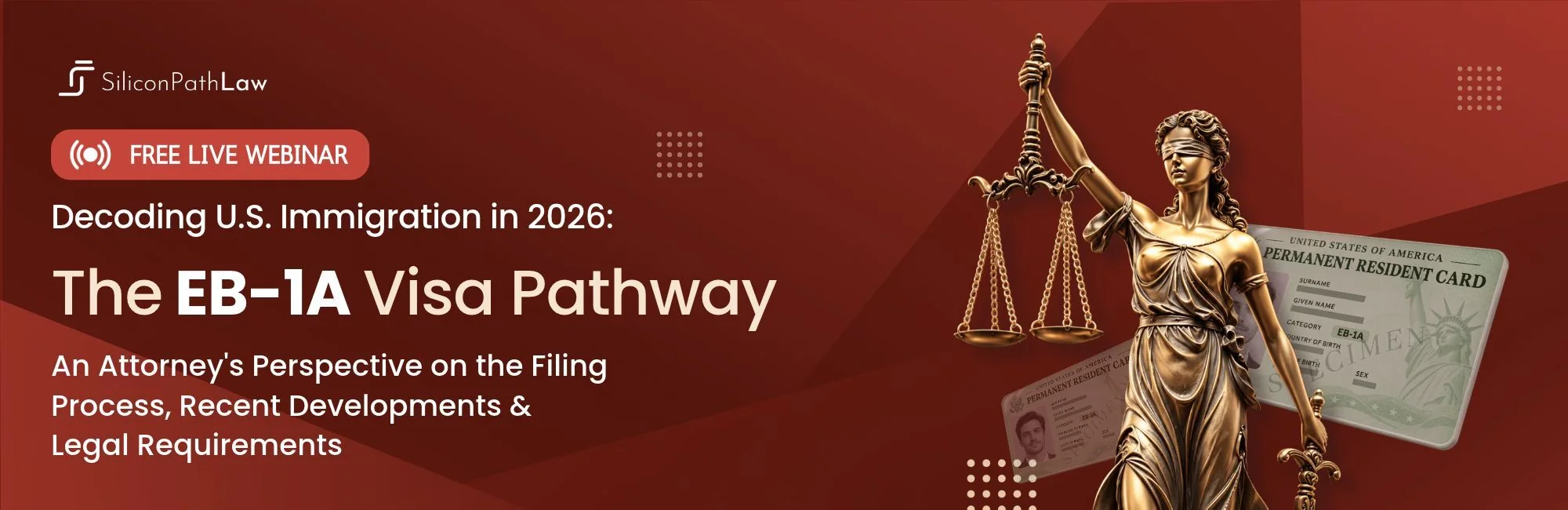
Decoding U.S. Immigration in 2026: The EB-1A Visa Pathway
Explore the EB-1A extraordinary ability green card pathway in this attorney-led webinar from SiliconPath Law. Learn about EB-1A visa eligibility, USCIS evidence requirements, the two-step petition evaluation process, common filing mistakes, and practical considerations for professionals pursuing permanent residence in the United States.
Watch On DemandKey Webinar Highlights
1. EB-1A Immigration Trends and Policy Developments in 2026
Understand how developments affecting employment-based immigration, including H-1B uncertainty and employer-sponsored green card processing, influence interest in the EB-1A category.
The webinar explores why EB-1A self-petitioning appeals to eligible researchers, entrepreneurs, executives and other accomplished professionals seeking a green card pathway without employer sponsorship, a job offer or PERM labor certification.
2. EB-1A Eligibility Requirements and USCIS's Two-Step Evaluation
Learn how USCIS evaluates extraordinary ability petitions through a two-step review:
- Initial evidence review: Demonstrating a qualifying major internationally recognized award or satisfying at least three of the ten EB-1A regulatory criteria.
- Final merits determination: Evaluating the evidence as a whole to determine whether the applicant has sustained national or international acclaim and is among the small percentage at the very top of their field.
Meeting three EB-1A criteria does not automatically establish eligibility.
3. Understanding the EB-1A Evidence Criteria
Explore how USCIS assesses supporting documentation for several important EB-1A criteria:
- Original contributions of major significance: Evidence demonstrating the significance and impact of an applicant's work within their field.
- Judging the work of others: Documentation establishing actual participation in evaluating the work of other professionals.
- Leading or critical roles: Evidence showing the importance of an applicant's responsibilities within organizations or establishments with distinguished reputations.
- High salary or remuneration: Compensation evidence supported by appropriate comparisons with others in the field.
- Published material about the applicant: Qualifying media coverage focused on the applicant and their professional work.
The discussion highlights why documented impact, independent evidence and the relevance of each achievement matter when preparing an EB-1A petition.
4. Common EB-1A Petition Mistakes and Evidence Gaps
Discover frequent challenges that can affect EB-1A petition preparation, including:
- Generic recommendation letters without specific supporting examples.
- Claiming EB-1A criteria without sufficient evidence.
- Relying heavily on internal recognition without appropriate corroboration.
- Treating the ten regulatory criteria as a checklist rather than considering the final merits determination.
- Rushing an incomplete petition through premium processing.
- Submitting inconsistent employment, publication or professional records.
Learn why a well-documented petition should clearly connect professional achievements to the applicable legal requirements.
5. EB-1A Profile Building, Filing Readiness and Live Q&A
The webinar also addresses practical questions about preparing for an EB-1A petition, including:
- When to begin documenting professional achievements and recognition.
- How to assess whether an existing professional profile may support an EB-1A petition.
- Why filing decisions should be based on individual eligibility and evidence rather than assumptions about future approval trends.
- How applicants with disabilities are evaluated under the same applicable EB-1A eligibility standards.
Watch the full webinar for an attorney's perspective on EB-1A eligibility, USCIS evaluation standards, evidence preparation and common petition challenges.
Watch On DemandAttorney Advertising. This webinar is provided for general informational purposes only and does not constitute legal advice. Eligibility and petition outcomes depend on individual facts and circumstances. Viewing this recording does not establish an attorney-client relationship.